
The Governor’s Escalating Rule
William TellThis flow follows Hermann Gessler’s coercive policies from intrusive intimidation to the collapse of his authority.
increasing Bearing strength in each event
 decreasing
Bearing strength in each eventdecreasingA Threat to Stauffacher
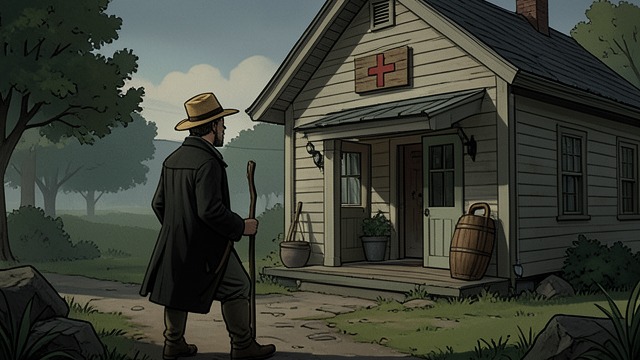
A Threat to Stauffacher
Intimidation at home
Hermann Gessler stops before Werner Stauffacher’s newly built house and challenges the idea that a peasant may build freely. His threat exposes how a governor can turn ordinary prosperity into a test of obedience.
Authority without consent
Stauffacher had answered that the house ultimately belongs to the emperor and is held in fief. Gessler rejects even that formal deference as insufficient, signaling that submission must be visible and personal.
The encounter drives Stauffacher toward political consultation. A household’s security no longer seems protected by custom or legal language alone.
The Fortress and the Cap
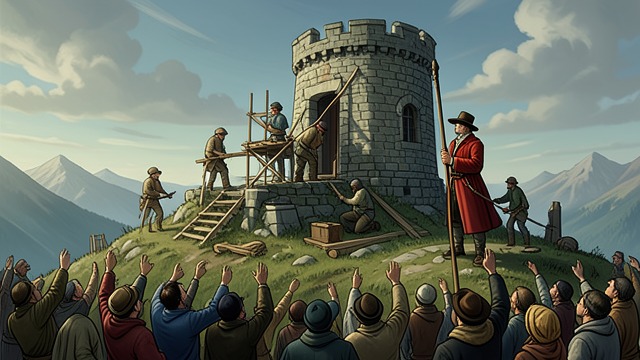
The Fortress and the Cap
A built instrument of control
At Altdorf, workers raise a keep intended to secure the governor’s hold over Uri. The laborers understand the building as a prison being constructed against the very people forced to erect it.
A public test of submission
Gessler also orders the people to salute his hat on a pole. The absurdity of the command does not lessen its force: refusal can be punished as disloyalty.
The fortress and the hat express the same policy in different forms. One dominates the landscape; the other makes every passerby enact obedience.
The Apple-Shot Ordeal
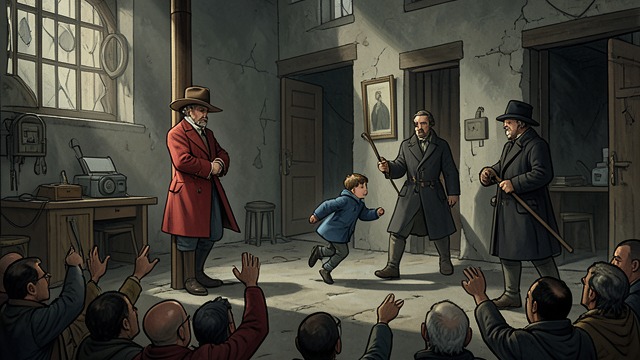
The Apple-Shot Ordeal
Coercion made spectacle
After Wilhelm Tell passes the hat without saluting, Gessler orders him to shoot an apple from Walter Tell’s head. The punishment is designed to make a father’s love and a community’s fear serve the governor’s authority.
A forced demonstration
Tell protests that the command is monstrous, but Gessler persists and threatens the boy’s life. Walter remains brave, while the crowd is left watching an ordeal it cannot safely stop.
Tell’s accurate shot saves his son, but the governor turns the moment into a further trap by asking about the second arrow. A display of skill becomes the pretext for imprisonment.
The Prisoner’s Removal
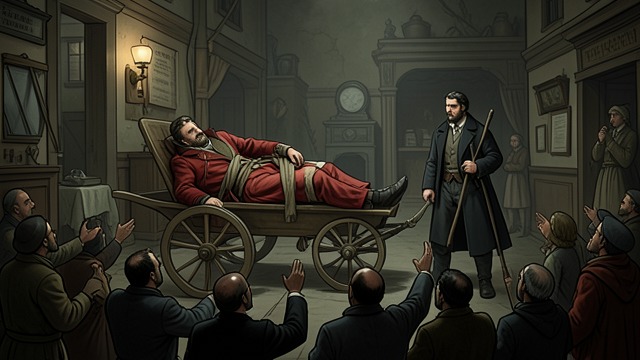
The Prisoner’s Removal
Punishment after compliance
Tell truthfully says that his second arrow would have been aimed at Gessler had the first killed his child. Gessler had promised to spare his life, but uses the admission to order his confinement.
A conflict widened
The governor’s action reveals that obedience to the test offers no dependable protection. Tell is bound and taken toward the lake under armed guard, while his family and allies can only watch.
The removal deepens the crisis beyond one man’s defiance. It convinces many that the existing political settlement cannot protect even those who survive a governor’s demands.
The Governor’s Death
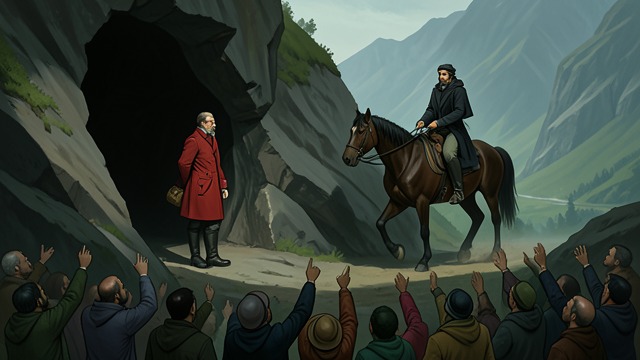
The Governor’s Death
A final meeting in the pass
Tell escapes the storm-tossed ship and reaches the route Gessler must travel. He waits in concealment, recalling the apple ordeal and the threat it revealed to his family.
The end of coercive rule
When Gessler rides past, Tell shoots him. The dying governor recognizes the archer, while the people declare that the country’s enemy has fallen.
The killing removes a central instrument of oppression but does not itself establish a lasting political order. The uprising and the seizure of strongholds must still complete the broader struggle.
Early in the story, at Steinen
Early in the story, at Altdorf
Midway through the story, at Altdorf
Immediately after the apple shot
Near the ending, in the pass to Küssnacht
